
“Feel The City Tours”: scams and fake tickets, the tourism fraud network operating in Europe
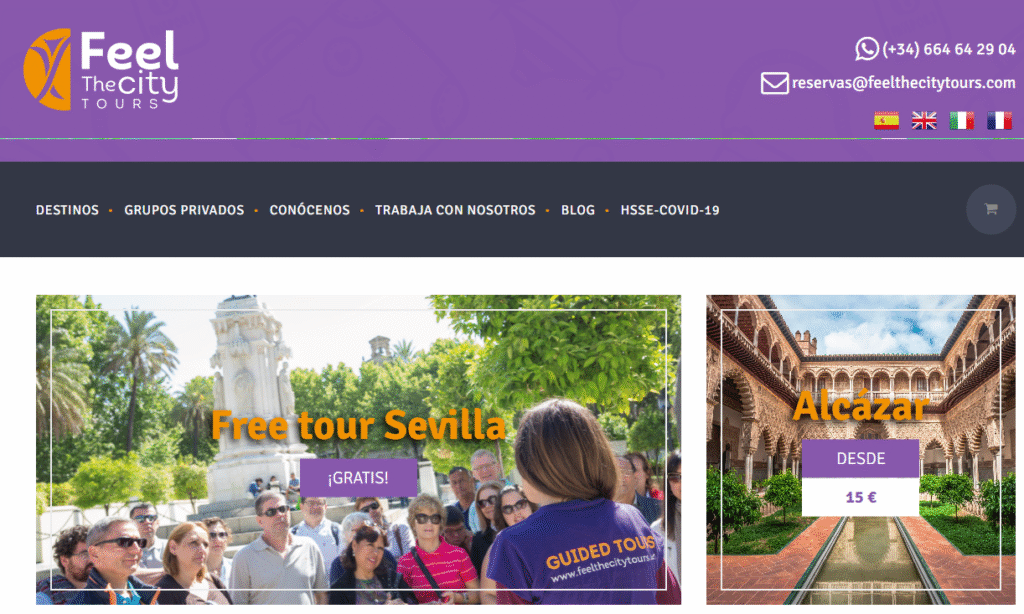
A new form of digital fraud is affecting tourists from around the world who are looking for tickets to Europe’s main attractions. Under the name “Feel The City Tours,” a scam operation with no verifiable structure or institutional backing appears in search engines as if it were an official provider of tickets and guided tours for iconic destinations such as the Vatican Museums, the Colosseum, the Eiffel Tower, the Louvre Museum, or the Palace of Versailles.
Behind a professional-looking appearance, multiple complaints point to the same pattern: websites that imitate official portals, inflated prices, and, in many cases, the complete absence of the service that was purchased.
A repeated pattern: deception, overpricing, and lack of service
An analysis of recent testimonies from affected users reveals a consistent fraud structure. Complaints converge on at least four systematic practices:
- Impersonation of official websites
Users describe pages designed to look like official portals of museums or monuments. This creates a false sense of legitimacy at the moment of purchase. - Abusive pricing
Ticket prices can reach up to three times the cost of official channels. One reported case shows tickets priced at 68 euros being resold for 125 euros without any additional service. - Uncertainty in ticket delivery
The company promises to send the tickets up to 24 hours before the event, leaving the buyer with no room to react if any problem arises. - Non-fulfillment or cancellations
Numerous users report that they never received their tickets or experienced last-minute cancellations without any real solutions.
Testimonies that confirm the operation
The comments analyzed show recurring terminology and emotional patterns that reinforce the fraud hypothesis.
“Total scam,” “fraud,” “thieves,” and “fake site” are repeated expressions.
The accusation that the site “pretends to be an official website” appears frequently.
There are also repeated complaints about the systematic refusal to issue refunds.
Some users mention automated responses—allegedly generated using artificial intelligence—used to reject complaints.
Even in cases where a refund is offered, it is often partial or conditional, which increases suspicions of deliberately deceptive practices.
A larger problem: the role of platforms
One of the most sensitive points emerging from this case is the continued presence of these websites in search engines such as Google, both in organic results and paid advertisements. This raises questions about advertising validation mechanisms and the responsibility of technology platforms.
At the same time, the lack of visible action from European regulatory bodies, such as the European Commission, opens a debate about the effectiveness of consumer protection systems in the digital environment.
Regulatory gaps and gray areas
The case of “Feel The City Tours” highlights a structural problem: the difficulty of legally pursuing digital entities with no clear physical presence that operate across multiple domains and jurisdictions.
The combination of:
- corporate anonymity
cross-border online payments
and heavy use of search engine positioning - creates an ideal ecosystem for this type of fraud.
Real impact: unprotected tourists
The damage is not only economic. Many affected individuals recount the frustration of losing unique experiences during trips that had been planned well in advance. In high-demand destinations, failing to obtain last-minute tickets often means being completely unable to access the attraction.
In addition, the inability to recover the money or obtain clear answers worsens the sense of helplessness.
The case of “Feel The City Tours” is not an isolated incident but rather a symptom of a broader problem: the lack of effective control over global digital commerce. While technology facilitates access to tourism services, it also enables increasingly sophisticated forms of fraud.
The absence of visible sanctions and the continued presence of these platforms online raise a critical question: who really protects consumers in the digital economy?
Until that answer becomes clear, responsibility will continue to fall largely on users themselves, who are forced to verify every transaction in an environment where the appearance of legitimacy is no longer a guarantee of security.
“Feel The City Tours” estafas y entradas falsas, la red de estafas turísticas que opera en Europa
Recomendados de Guiaempresaxxi:
La trampa de la lealtad: la hipocresía silenciosa de los departamentos de Recursos Humanos
Comer de la basura, "De la Prosperidad a la Pereza: La Épica Odisea de Milei y el Banquete de Basura...
Cristina Kirchner, La hipocresía del poder: cuando el discurso “popular” no resiste una guardia médi...
La vivienda en España: cómo la desinformación, la presión estructural y los intereses económicos est...
El Surtidor – Ferretería en Ciudad de México
La vivienda en España: cómo la desinformación, la presión estructural y los intereses económicos están profundizando la crisis habitacional

Estafas a Jubilados del PAMI a través de llamadas de WhatsApp desde el número+54 9 1140316266
About The Author

Martina Salcedo
Martina – Redactora especializada en Finanzas, Empresas y Trading Martina es una redactora con sólida experiencia en el ámbito financiero, especializada en la creación de contenido claro, preciso y actualizado sobre mercados financieros, estrategias de inversión, economía corporativa y tendencias del mundo empresarial. Su enfoque combina un profundo conocimiento técnico con una gran capacidad de comunicación, lo que le permite traducir conceptos complejos en información accesible para diversos públicos, desde principiantes hasta profesionales del sector.