
Navega las ofertas laborales
India Street Food, Viral Video and Cultural Misreadings: What India’s Food Stalls Reveal About the Global Gaze
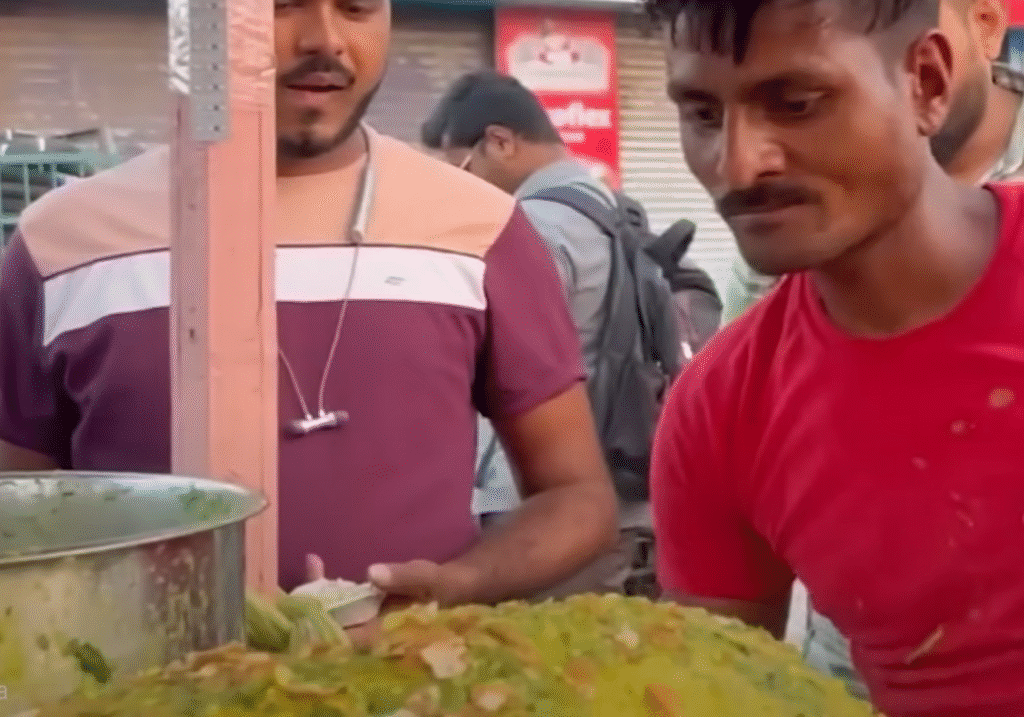
Videos of Indian street food have become a recurring feature on TikTok and Instagram feeds around the world. Shot with handheld cameras and edited for shock value, they often show vendors preparing food with bare hands, amid traffic, dust and crowds. For many viewers outside India, the images trigger disbelief and concern. For the platforms’ algorithms, they deliver exactly what is required: engagement, outrage and shares.
What these clips rarely offer is context.
The viral formula is simple. A foreign influencer approaches a street stall, films the preparation process, reacts with visible discomfort and, in some cases, reports illness afterward. The narrative is immediate and effective: Indian street food is unsafe, unhygienic and risky. Yet this framing collapses a complex social and cultural reality into a few seconds of spectacle.
From a public-health perspective, concerns about sanitation are not unfounded. In many Indian cities, informal food vendors operate without access to running water, refrigeration or standardized inspections. But to interpret this as a cultural indifference to hygiene is to misunderstand both India and the nature of informal economies globally.
Hygiene standards are not culturally neutral benchmarks; they are shaped by infrastructure, regulation and income levels. In Western economies, food safety is enforced through formal systems backed by capital-intensive supply chains. In India’s informal sector, where millions rely on street food daily for affordable meals, those systems are often absent or unevenly applied. The issue is less cultural neglect than structural constraint.
There is also a biological and experiential dimension often overlooked. Local consumers, exposed from childhood to specific bacteria and preparation environments, develop tolerances that short-term visitors do not. What appears dangerous to a tourist can be routine to a resident. This does not eliminate health risks, but it does change how those risks are perceived and managed.
Culturally, street food occupies a central place in Indian urban life. It is not merely a source of calories but a social institution. Vendors specialize in regional recipes refined over decades. Neighborhood stalls act as informal gathering points, serving students, workers and families alike. To many Indians, street food represents continuity, familiarity and identity, not hazard.
Economically, the stakes are significant. Street vendors form a critical layer of employment in a country where formal job creation has lagged population growth. For these workers, compliance with Western-style sanitation norms is often financially impossible without state support or infrastructure investment. Viral condemnation does little to address that gap.
The global audience consuming these videos is also part of the story. Platforms reward content that confirms preexisting assumptions about poverty and disorder in the Global South. Clips that show clean, well-run street stalls or regulated food markets rarely go viral. Disorder travels better than nuance.
India, like any large country, contains contradictions. Alongside informal vendors operating under difficult conditions are street-food entrepreneurs who maintain high standards and attract international acclaim. Social media, however, tends to flatten this diversity into a single narrative optimized for clicks.
The lesson is not that concerns about food safety should be dismissed. It is that viral video is a poor substitute for analysis. What appears on screen is often less a documentary record than a performance shaped by platform incentives and audience expectation.
In the end, the global fascination with India’s street food says as much about digital culture and its appetite for extremes as it does about the country itself. Without context, the viewer is left not with understanding, but with a caricature—one that travels fast, and explains very little.
